
the experience of sounding
Franziska Boehm | November 2026
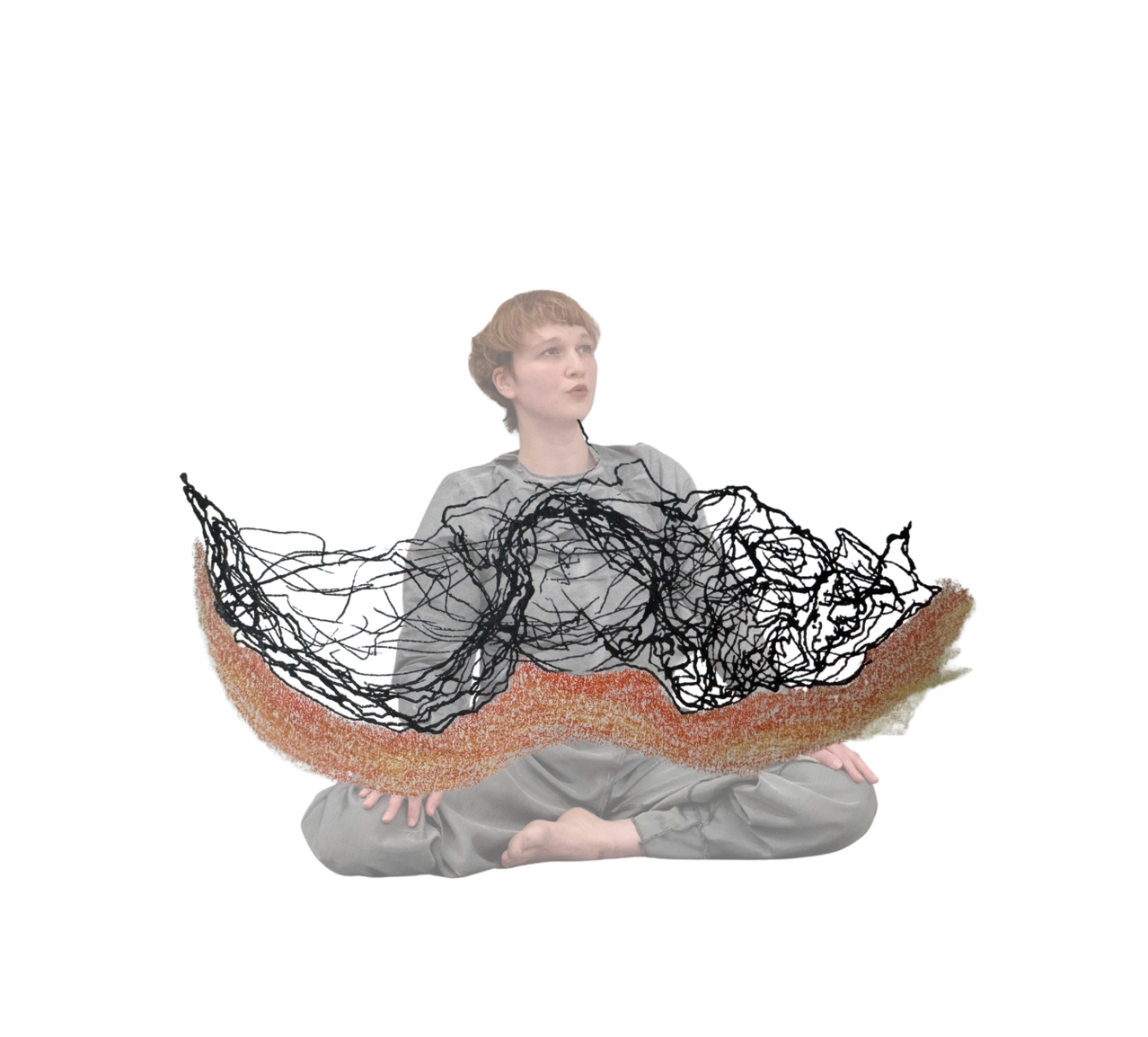
In response to Chapter 3 — Sonic Spectres, Moving Discourse is delighted to present a lecture performance by Franziska Boehm and Serena Ruth on the weight and place of sounding. Created and performed collaboratively during Boehm’s PhD at Trinity Laban Conservatoire for Music and Dance, this experimental text explores how each sound has its own weight and a place in the vocalic self. The vocalic self — a term Franziska coined in her PhD — is concerned with the body not as a vessel but as psychophysical, expansive being that is in constant motion through imagination, sensation, and sounding. Through a feedback loop method based on the felt sense, Serena explored the weight and place of sound in the vocalic self while Franziska performed the text. Together, they were holding a performative space in which different forms of knowledge were in a constant feedback loop.

I have found that the feedback loop
between practice and theory
is so intertwined
that where one is in their life and practice is exactly
where one will show up to their theory

Which is to say that last Monday, I crossed the street in a rush, I began to practice in a rush and I thought it felt rushed.
What the felt sense of, for example, a rushed day is, seems clear.
We all know how a rushed day might feel for us.
If I reflect about this rushed-day felt sense within the context of phenomenology and somatic based movement practices, the word ‘rushed’ might not be accurate to describe what was experientially going on that day. The psychologist and phenomenologist E. Gendling states that if symbols are put in relation to something that we feel and they fail to symbolize adequately what we mean, there is no relationship with the kinaesthetic consciousness (Gendlin, [1962] 1997).
This is to say, that the actual bodily felt sense of the day wasn’t vague (or failed to reveal itself to me in the form of sensation) at all, but the word ‘rushed’ didn’t align with my implicit knowing of it.
The concept of the felt sense is at the core of my research methodology. The felt sense, according to E. Gendlin, is a cultivated embodied state in which we know more than we can tell. We have a feeling which is very specific, like something felt very peculiar or surprising, but the words to describe ‘the it’ don’t match the complexity of the actual lived experience. Gendlin therefore advocates for a phenomenological method in which language and experience are in a constant, non-hierarchical relationship with each other. This led me to explore multimodal feedback loops between theory and practice, between thought and action, between moving and singing, between moving-and-sound and drawing etc.
I want to share with you what my work has revealed about the shape of the feedback loop that exists between implicit and explicit knowing if impacted by E. Gendlins concept of the felt sense and how the vocalic self (the practitioner practising this felt sense feedback loop method) got the gift to imagine and experience their voice as weight and place.
Chapter one: we are already defeated
Gendlin proposes to reverse the philosophical order of meaning making so that logical relationships "do not determine the creation of meanings ... [but] are secondary and dependent on something else" (Gendlin, [1962] 1997, p.144).
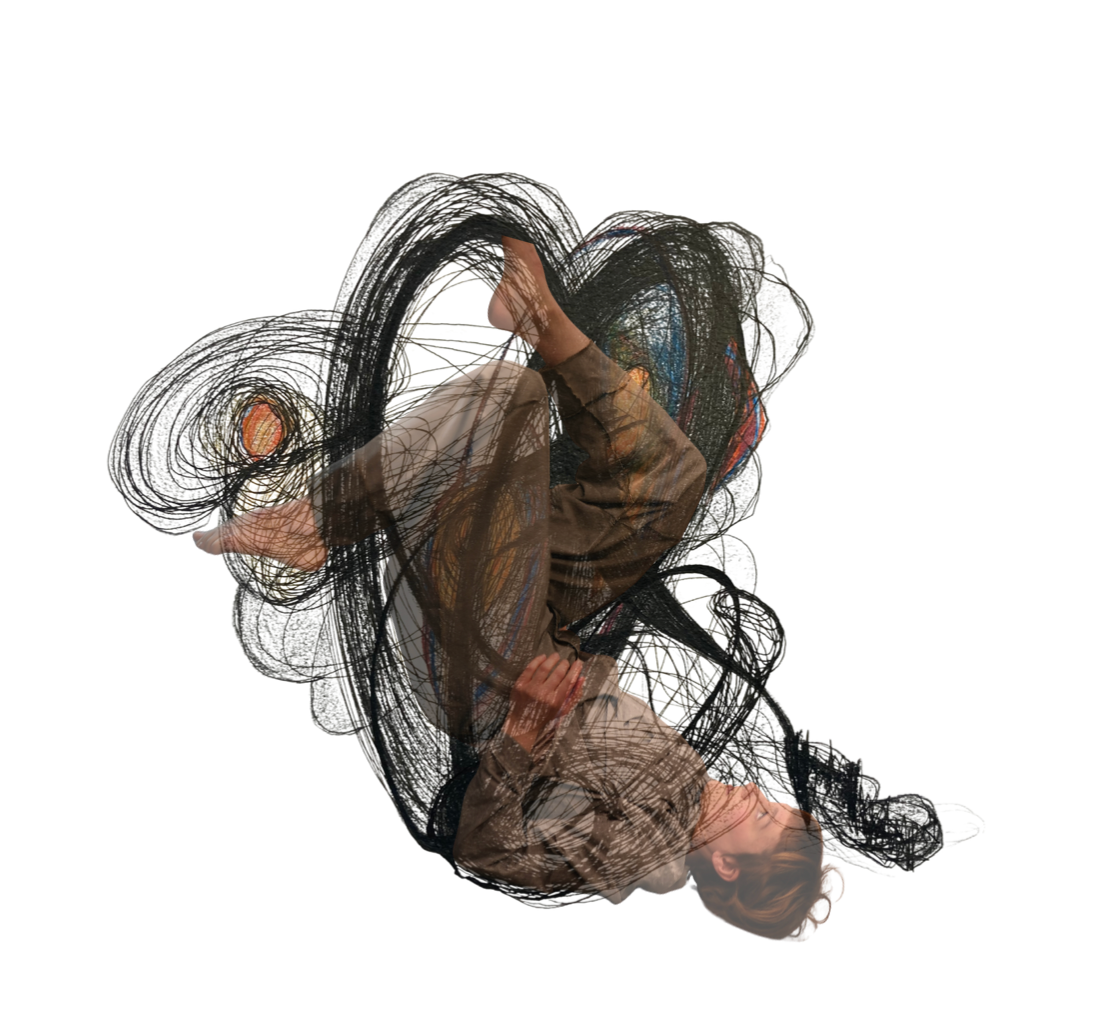
Feedback loops (reversed) are a core part of my practice
Implicit explicit
Action thought
Experience drawing
Implicit to less implicit
Less implicit to lesser implicit to explicit
A continuum of knowledge in flux
The trial and error of reversed feedback loops is more present than I would wish it to be
Trial and error, in relation to feedback loops, is a sense that “That feedback loop did not work”
When exploring the perception of the vocalic self we come to say things like:
“we have talked it dead”
Which means something along the lines that the weight and place of sounding has left the kinaesthetic consciousness
In the long run it is far more generative to stay with the feeling of it than giving the day/practice/sound/movement a title of i.e. bad or rushed..
So, When we say it did not work, we are simply saying that we are not getting what we want
Deeply understanding the weight and place of sounding
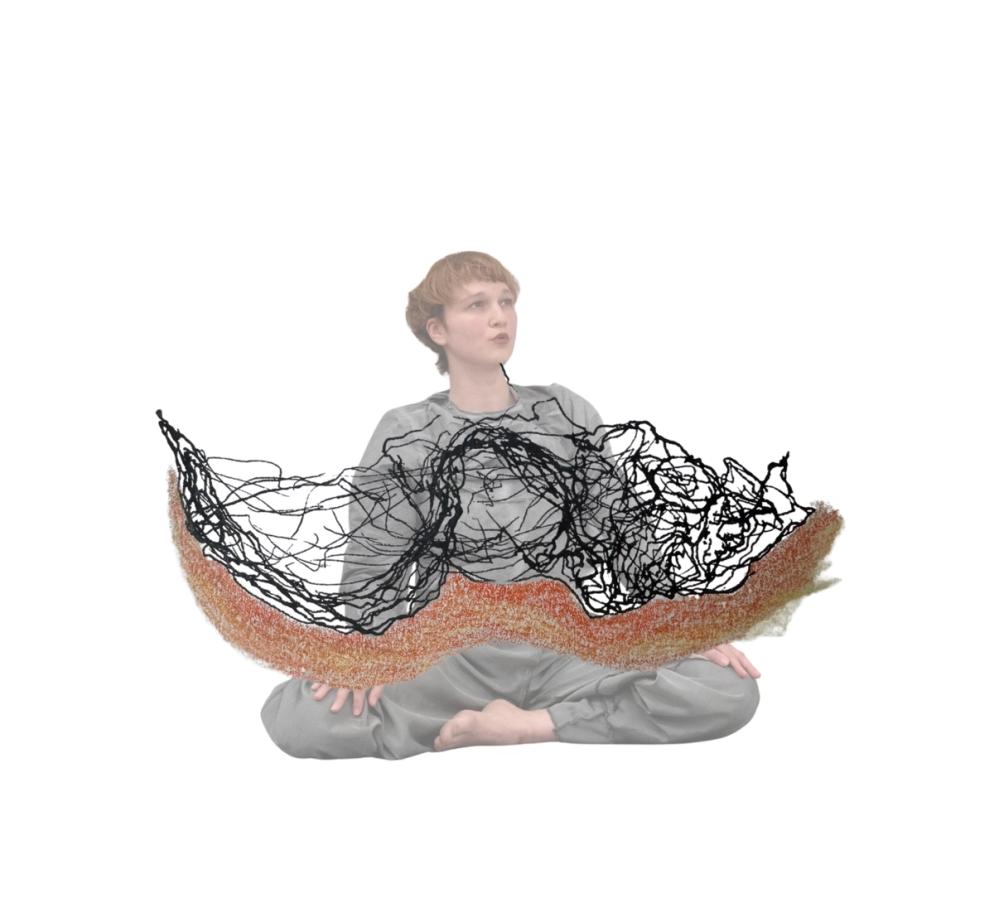
Accepting that the reversed order of the feedback loops will throw you across the space (fuck you up) is half of the work. Letting them do its work on you while navigating the usefulness of the experiments is the role of a practitioner-as-researcher (letting go of assumptions, not forcing things to happen, valuing slowness etc.).
But all of this being thrown across the space and not knowing/trusting the process is part of a heuristic research process so that as the heuristic research Moustakas states: “Finally, the heuristic researcher develops a creative synthesis, an original integration of the material that reflects the researcher’s intuition, imagination, and personal knowledge of meanings and essence of the experience” (Moustakas, [1958] 2009, p.50).
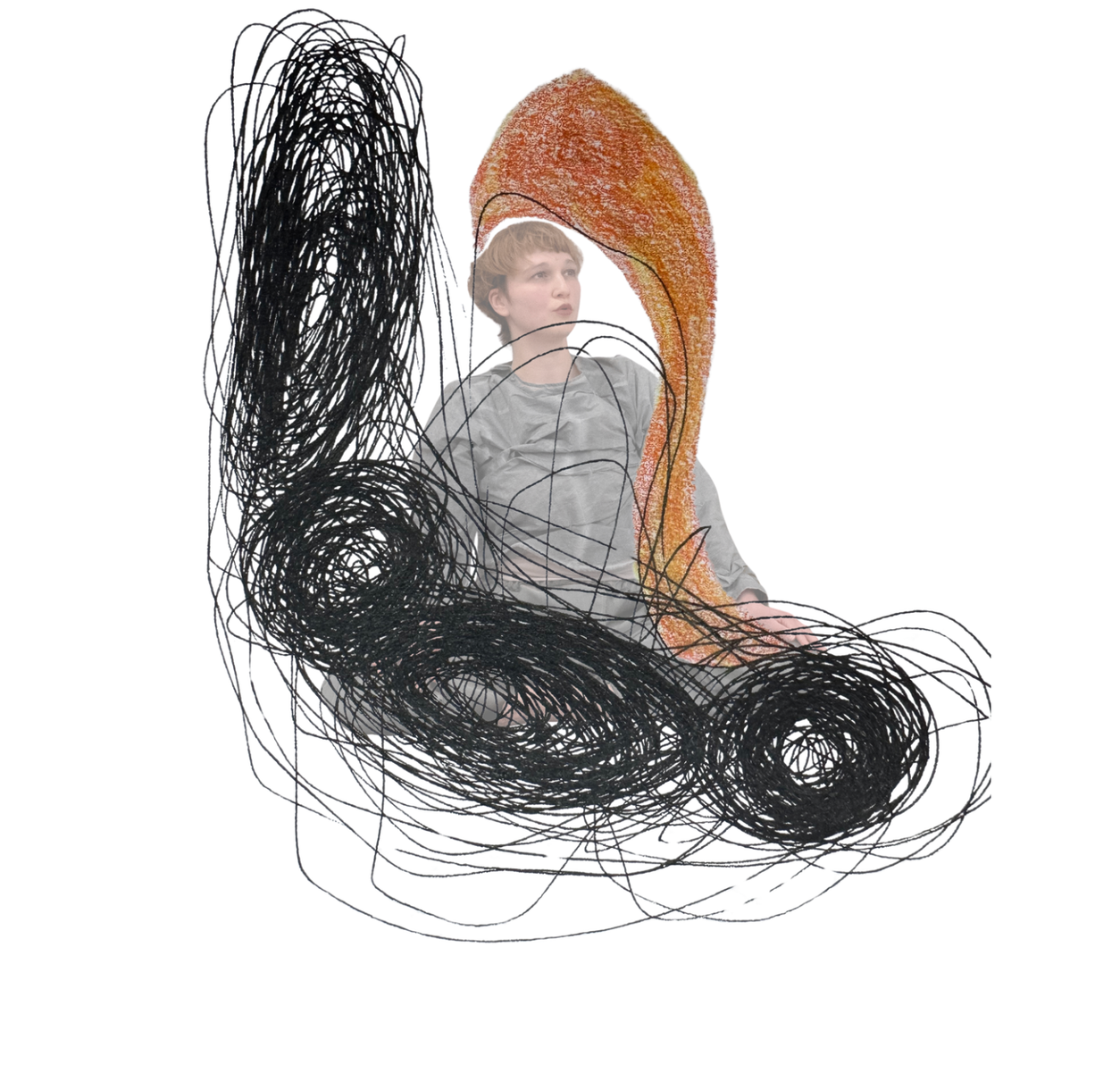
Chapter two: the shape of the feedback loop
The nervous system receives information from the external through the skin, eyes, ears, mouth and nose and from the internal through the proprioceptive senses. A stream of information is perceived from which the subject can make the decision of what to pay attention to. The movement researcher Martha Eddy says that “sensory perception is connected to the idea of the sensory-motor cycle, a neural loop of the nervous system “usually perceived as an arc with stimulus flowing in and a response arching out” (Eddy, 2017, p. 210).
Feedback loops within practice as research according to the researcher Robin Nelson run a rhythmic of
Action - thought - action - thought - action -thought
The shape of a feedback loop is therefore cyclical
it loops,
It cycles
Action to thought
The shape of a feedback loop in movement practices that value sensing, slowing down, tuning into the breath and connecting, tends to be something along the lines of: our actioning is a doing, which is thinking, that returns information to us in the form of more thought.
The other day, I met KJ in the corridor
she spoke of coming to know the universe in a split second:
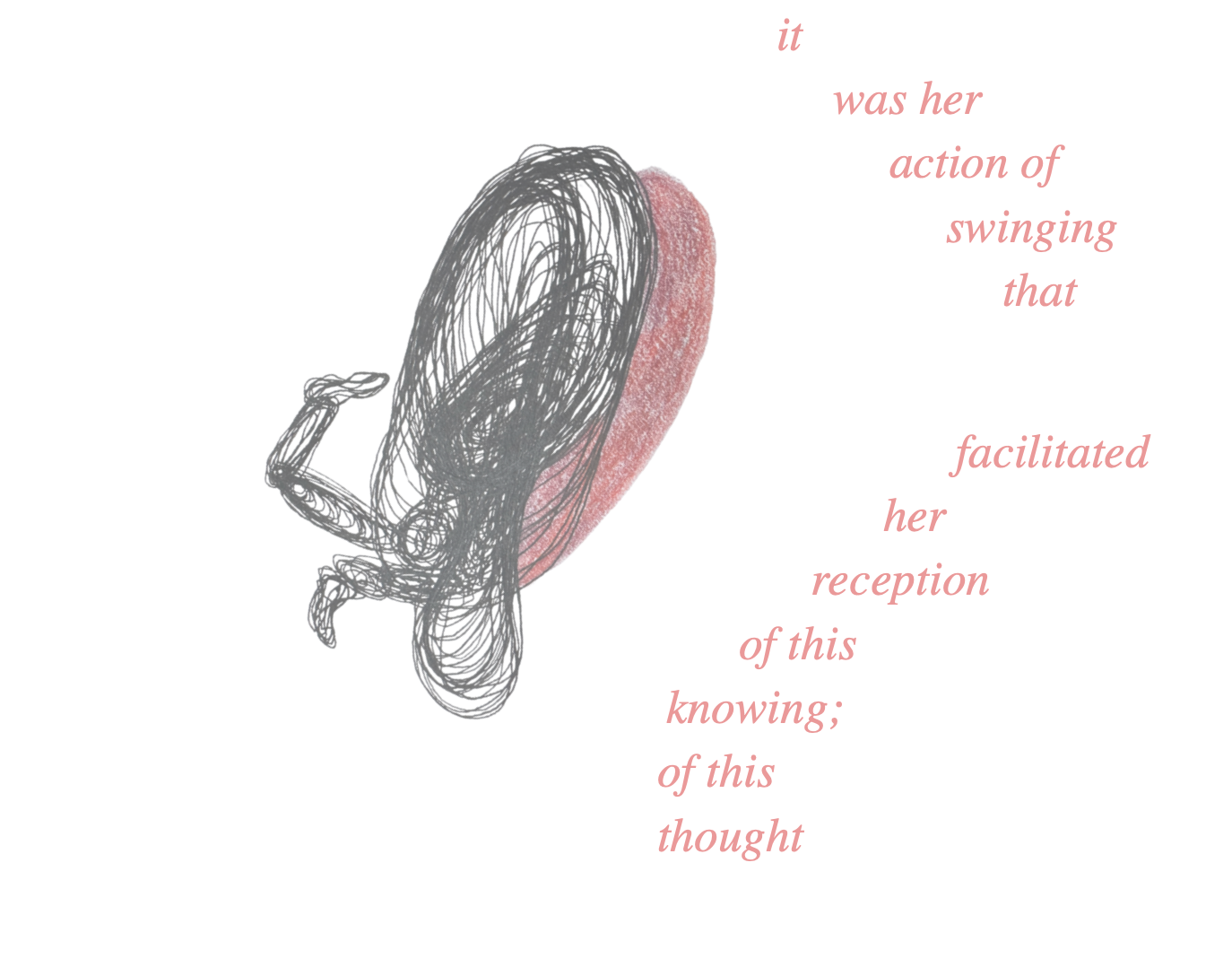
In sounding or sounded practices and for the vocalic self, the shape of a feedback loop tends to be something along the lines of: our creation of sound generates something outside of us, which can be picked up by — fed back to our ears. The sound leaves our mouths or instruments and returns to us via our ears
The place of the person in both of these feedback loops is clear
We are where it begins and where it ends
We sound and our ears hear
We swing and receive a felt sense of knowing
So, The feedback itself remains something larger than us, and it remains a gift to receive that which is larger than us, but we nonetheless remain the beginning and ending
It is us that commences the feedback loop
And us that receives the information fed back from the feedback loop
We are prime mover if you will and the feedback loop is its own entity
We are the place that the feedback loop originates from and ‘feeds back’ to
feedback is always a response
Even when the work is improvisational or intuition based, even when we have a strong sense that something ephemeral is passing through us, even when we know in our bones that we are only material, the cyclical shape of feedback loop cannot help but position us as the start and end of the
loop
Even if it starts only to end to start to end
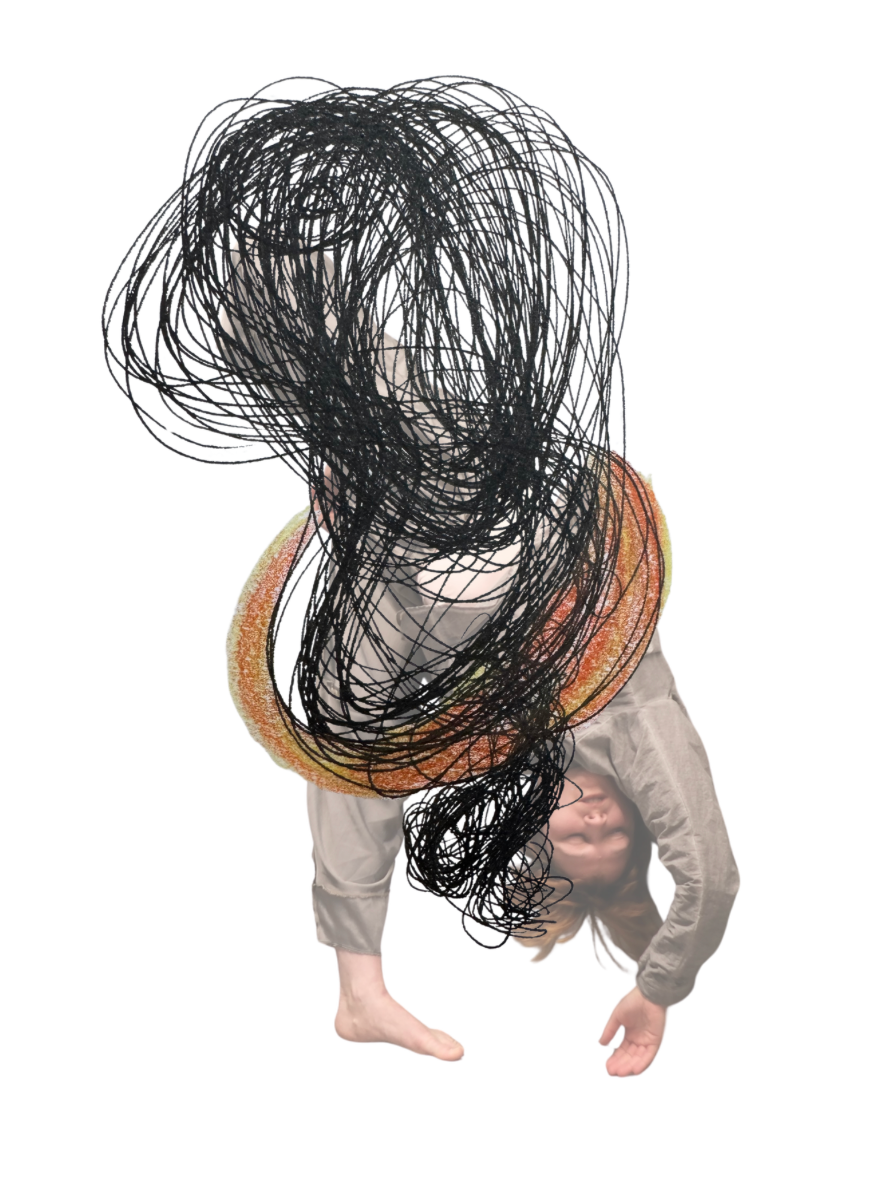
again to restart…
…There is more to the loop of feedback than a circle.
I propose that a more accurate shape for a feedback loop to take, within a movement based practice as research project, is a figure of 8
The feedback loop (a figure of 8) becomes one that does not originate from and come back to only you/me/us
Imagine a 3d figure of 8
A big loop ahead of you
A big loop behind you
You inhabit the place where all of the lines cross over
You inhabit the middle
You have become a mere part of the loop
Not placed at the beginning nor the ending.
Chapter three: imagination
“Invention begins when what signifies exceeds its signification - when what means one thing, or conventionally functions in one role, discloses other possibilities…” (p.41 Nelson cites Clark)
I want to reformulate, or imagine otherwise, the shape of a feedback loop
I wish to use my practice of mapping and performing to demonstrate how I have come to know ‘feedback loops’ to shift in shape: from oval or round, to a figure of eight
What i wish to share with you today is how the shape of a feedback loop changes when we remove ourselves from simultaneously inhabiting the start and finish of the feedback loop, and instead place ourselves smack bang in the middle
Still active, actioning agents
YOU SEE:
A circle or oval feedback loop re-informs itself
You receive feedback and respond from there
Thought to action action to thought
But a figure of 8 feedback is more multi and unpredictable
There is always a 2 way stream, happening twice, simultaneously
And there are multiple feedbacks of figure of 8s always running through our core
As a feedback loop, a figure of 8, it is far more generative
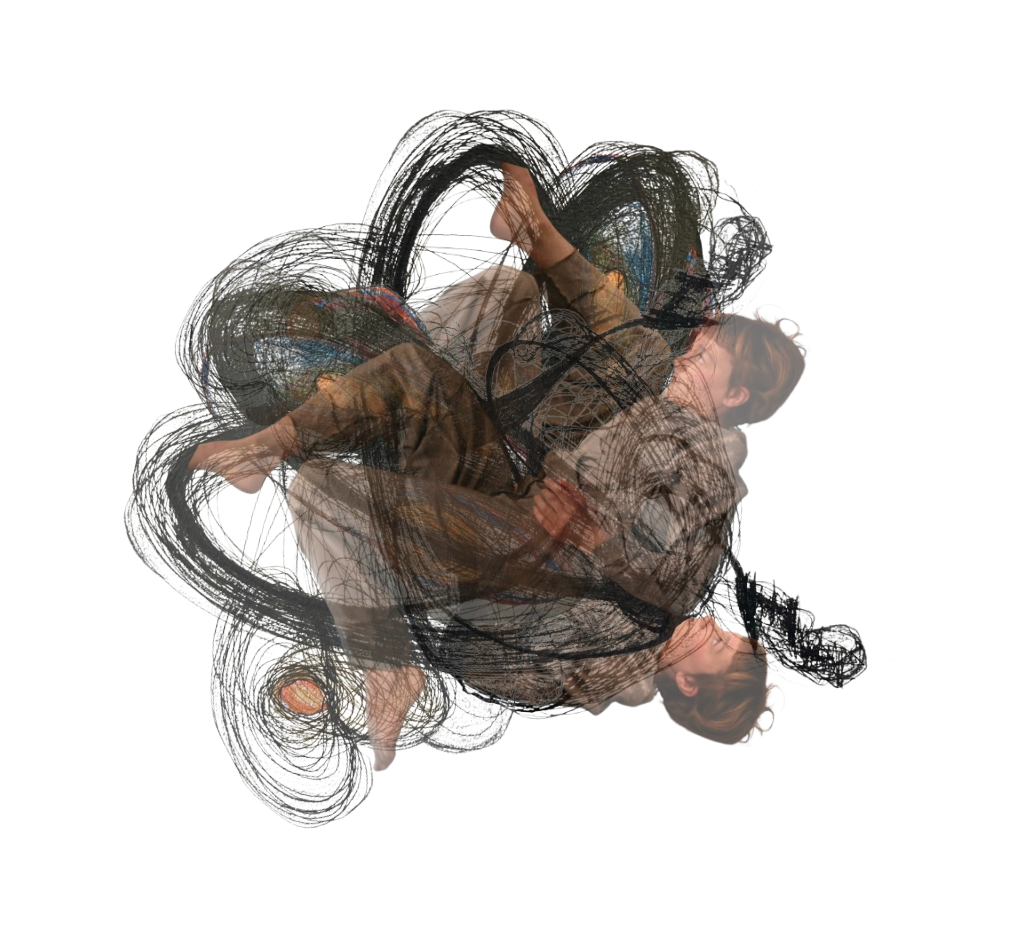
As a figure of 8 we get to get the gift of felt sense
I got to get the felt sense of the weight and pace of sounding
The essence of what I learned from recognising a feedback loop as figure of eight is that:
We get to understand, in some unworded, other-worldly way, what it is that we are coming up against; when we practice, when we make art, when we make love, when we encounter parts of ourselves outside of ourselves.
Editors Note:
The text is a with images and photos annotated script from a lecture performance Franziska Boehm gave at Trinity Laban Conservatoire of Music and Dance (2023), London and at Turf Project Space in Croydon (2024), London. This script was written during the third year of her PhD at Trinity Laban, from which she graduated in December 2024. It was written at a time in which she was tussling with the compartmentalisation of observer and doer that is necessary as a movement researcher. She scripted this text originally with her long-term collaborator Serena Ruth. Serena has been part of her research from the first moment, and they have co-authored articles and a praxis called Sounding Sensations together.