
HELMETING
in conversation with Zhuyang Liu
Zhuyang Liu and Imke F. Gerhardt | November 2026
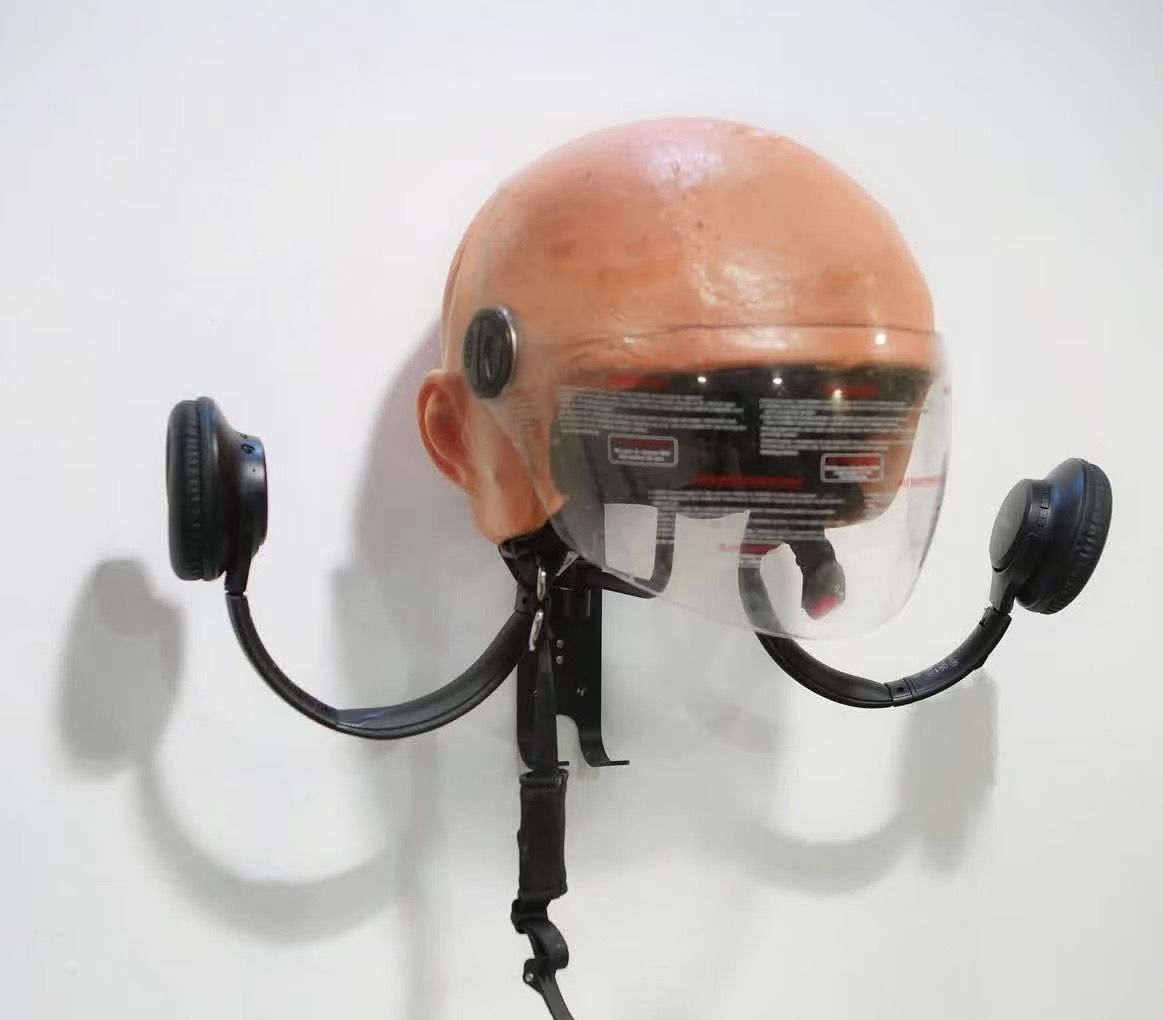
Does sound exist within an object, or is it always in motion — never resting, relational, a vibration that unfolds in-between and produces a shared, yet unstable space?
Centering on their work Helmeting, this conversation with artist Zhuyang Liu explores the idiosyncrasies of what might be called an acoustic field. It attempts to trace its frayed edges, which unsettle established distinctions of space by stretching and dissolving boundaries between personal and public, internal and external, self and environment.
We ask whether listening can still be anchored in the human body as a fixed point, or whether it is already distributed across a mediated and recursive field. Helmeting raises questions not only about perception, but about feedback, coupling, and the extent to which listening is embedded within broader technical and social systems.
In this sense, the conversation situates itself in relation to cybernetics and systems theory — particularly the notion of feedback loops and self-referential systems — as well as more recent discussions of posthumanism, in which the boundaries between body, media, and environment become increasingly porous.

IMKE: Before moving into a more theory-heavy exploration of Helmeting it would be helpful if you could briefly describe the work and in particular the helmets function. I’m interested in whether you would classify them as an accessory, or rather as something closer to an externalised organ, almost an implant. The sculpted ears, attached to — or rather carved into — the helmets, together with their flesh-like appearance, evoke a replica of the head.
What role does this mimetic gesture play in how we understand the boundary of the body and the act of listening?
ZHUYANG: The helmets are not particularly designed as accessories, nor simply as prosthetic organs, so it can be everything and nothing, I think of them as temporary infrastructures for listening. They reorganise how sound travels between bodies, technologies and space, and in doing so they reorganise the conditions through which listening takes place.
The sculpted ears are therefore not intended as realistic replicas of human ears. They occupy an ambiguous position between body and object. That ambiguity is important because it invites a simple question: where does listening actually happen? Does it begin at the ear, inside the body, within a device, or somewhere between people? Rather than providing an answer, the work keeps that boundary open.
For me, sound has never been just a physical vibration. It is also a material, a social sign and a carrier of memory. I’m understanding sound also as an action . The moment we hear something, we immediately connect it to previous experiences, cultural references, particular places and other bodies. Sound is always relational because it is always situated within a network of associations.
This understanding of sound gradually led me to think about the body in a different way. I’ve often described the body as a site of amplification and power, and increasingly I see sound in similar terms. Amplification is never simply about making something louder. Every act of amplification redistributes attention, authority, intimacy, distance, fear, care and collective behaviour. Sound doesn’t merely represent power; it actively participates in organising relationships.
Helmeting emerged from this line of thinking. The work is ultimately less about extending the body than about revealing that listening has never belonged to an isolated individual. It has always been shaped by architecture, technology, memory and other bodies. Sound is one of the few materials that cannot remain inside a single object. The moment it exists, it already belongs to a relationship.
IMKE: You somewhere wrote that the helmets do not isolate the listener, but rather make perceptual boundaries appear permeable. At the same time, you describe Helmeting as producing internal feedback loops.
Initially, these seem almost opposed — permeability suggesting openness, feedback —at least in systems theory — denote a closed system. Could you elaborate on how you understand these two dynamics, and how they relate to one another in the experience of the work?
ZHUYANG: I don’t actually experience permeability and feedback as opposing ideas. In Helmeting, one makes the other possible.
We often imagine feedback as a closed loop, but the feedback I’m interested in is never sealed or self-contained. It is constantly interrupted, redirected and expanded by bodies, movement, space and other people. The system remains alive precisely because it never closes.
This is why every participant hears something different. The extended headphones are not designed to deliver a complete composition to each individual. Instead, every helmet carries different channels, different fragments and different perspectives. No one experiences the work in its entirety.
What interests me is what happens next.
The moment someone puts on a helmet, they stop being a spectator and become part of the work’s behaviour. Their movements change another person’s listening. Their hesitation alters the rhythm of the group. Sometimes they follow someone else’s movement, sometimes they unintentionally lead it. Without any verbal instruction, participants begin adjusting to one another, and these adjustments gradually become part of the composition itself.
In that sense, feedback isn’t only acoustic, it is behavioural and social. Every decision made by one participant subtly transforms the experience of everyone else. The work is continuously rewritten through these interactions rather than through a fixed score.
This is why I describe the boundaries as permeable. Permeability doesn’t mean that everything dissolves into one homogeneous experience. It means that experiences remain connected while never becoming identical. Listening moves between bodies, technologies and space, continually reorganising relationships without erasing individual differences.
Rather than isolating listeners inside their own auditory worlds, the helmets create temporary forms of dependence, negotiation and collaboration. The work doesn’t ask participants to listen alone; it asks them to learn how to listen with and through one another.
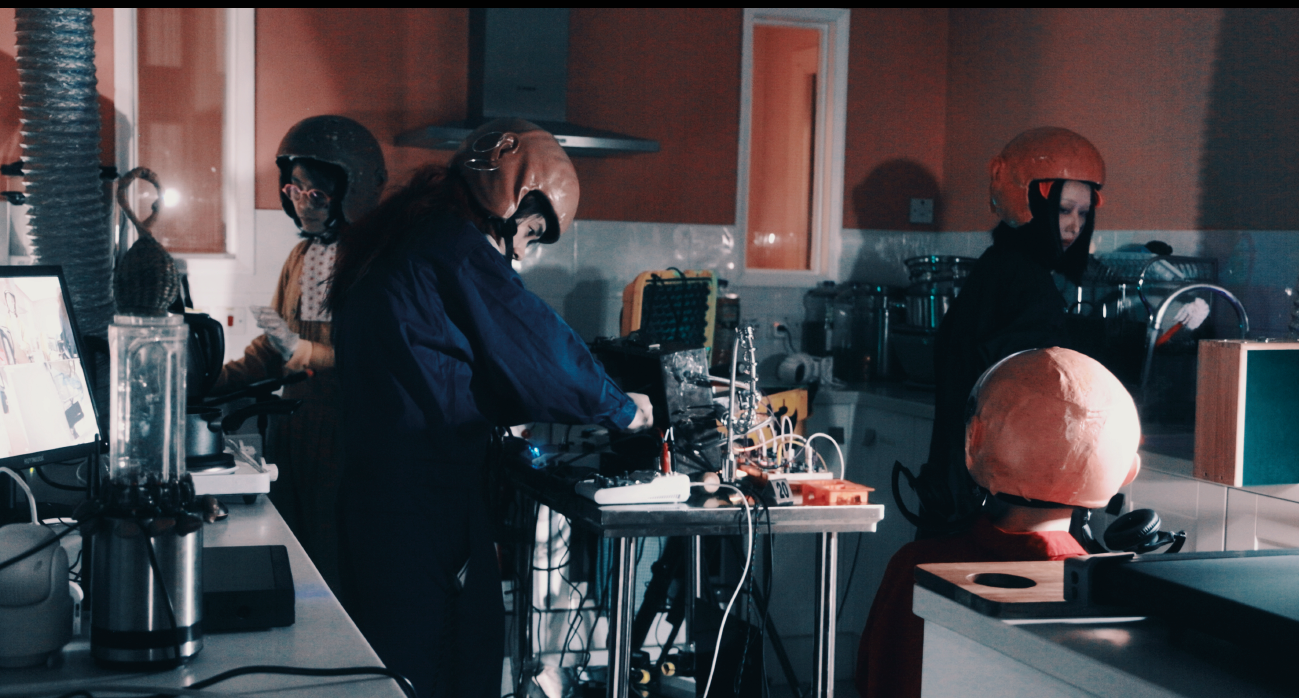
IMKE: Your work seems to resonate with cybernetic and systems-theoretical thinking - Niklas Luhmann’s notion of self-referential systems and feedback loops comes to mind.
Luhmann distinguishes between psychic systems (consciousness) and social systems (communication), which are operationally closed yet structurally coupled through media.
Each social system operates according to its own codes and distinctions; it is self-referential, self-generating, and operationally closed. Individuals, in this framework, are not elements of social systems though they are closely coupled to them through language, media, and norms.
If we think this alongside the contemporary condition of continuous media exposure — where interfaces are increasingly immediate and immersive — could Helmeting be understood as an intensification or expansion of this coupling? Does it make perceptible a form of already-existing integration between body, media, and communication systems?
ZHUYANG: What resonates with me in this question isn’t necessarily a particular philosophical framework, but the idea that certain relationships only become perceptible, when perception itself is reorganised.
I’m less interested in asking whether Helmeting fits into systems theory than in asking what the work allows us to notice. It doesn’t create new relationships between bodies, media and communication; it makes existing ones tangible.
What becomes visible is that communication is not only linguistic. Long before we speak, we are already communicating through movement, orientation, hesitation, distance and attention. We constantly adjust ourselves in relation to other people, often without consciously recognising it.
Helmeting amplifies these processes.
Participants begin responding to one another before a single word is exchanged. Someone slows down because another person has stopped. Someone turns because another body has changed direction. Someone waits because another participant is still listening. These small adjustments are not separate from the work—they are the work.
This is why I understand listening as a form of communication rather than simply perception. Listening doesn’t only receive information; it organises behaviour. It redistributes attention, produces relationships and allows a temporary social structure to emerge.
Communication, in this sense, is not something added onto listening. Listening is already one of its forms.
This idea extends beyond Helmeting and runs throughout my practice. I’m interested in situations where relationships become perceptible before they become explicit—where people begin negotiating space, time and behaviour before they negotiate language.
In that sense, feedback is also a metaphor. It isn’t limited to an acoustic loop between microphones and speakers. I’m interested in cultural feedback: the ways behaviours, gestures, images and symbols circulate through society, become repeated, remembered and gradually transformed into shared visual or behavioural languages.
Small actions rarely remain isolated. They are observed, imitated, translated and recontextualised. Through repetition they become habits, memes, rituals or collective memories. What begins as an individual gesture can gradually become part of a much larger cultural vocabulary.
This is also why the visual language of Helmeting is important to me. The sculptural form of the helmets, the enlarged ears and the act of wearing them are intentionally simple and recognisable. They are designed to be remembered, reinterpreted and circulated beyond the installation itself. I’m interested in how an artwork continues to evolve after the exhibition—through documentation, conversation, social media and other people’s memories.
Rather than demonstrating a theory of systems, the work creates a situation in which participants can experience how relationships are continuously organised through listening, while simultaneously asking how behaviours and images continue to circulate long after the listening itself has ended.
So if Helmeting explores how relationships are produced through listening. Then later, my work SPEAKERS, explores how those relationships continue to circulate, mutate and reproduce themselves as culture.
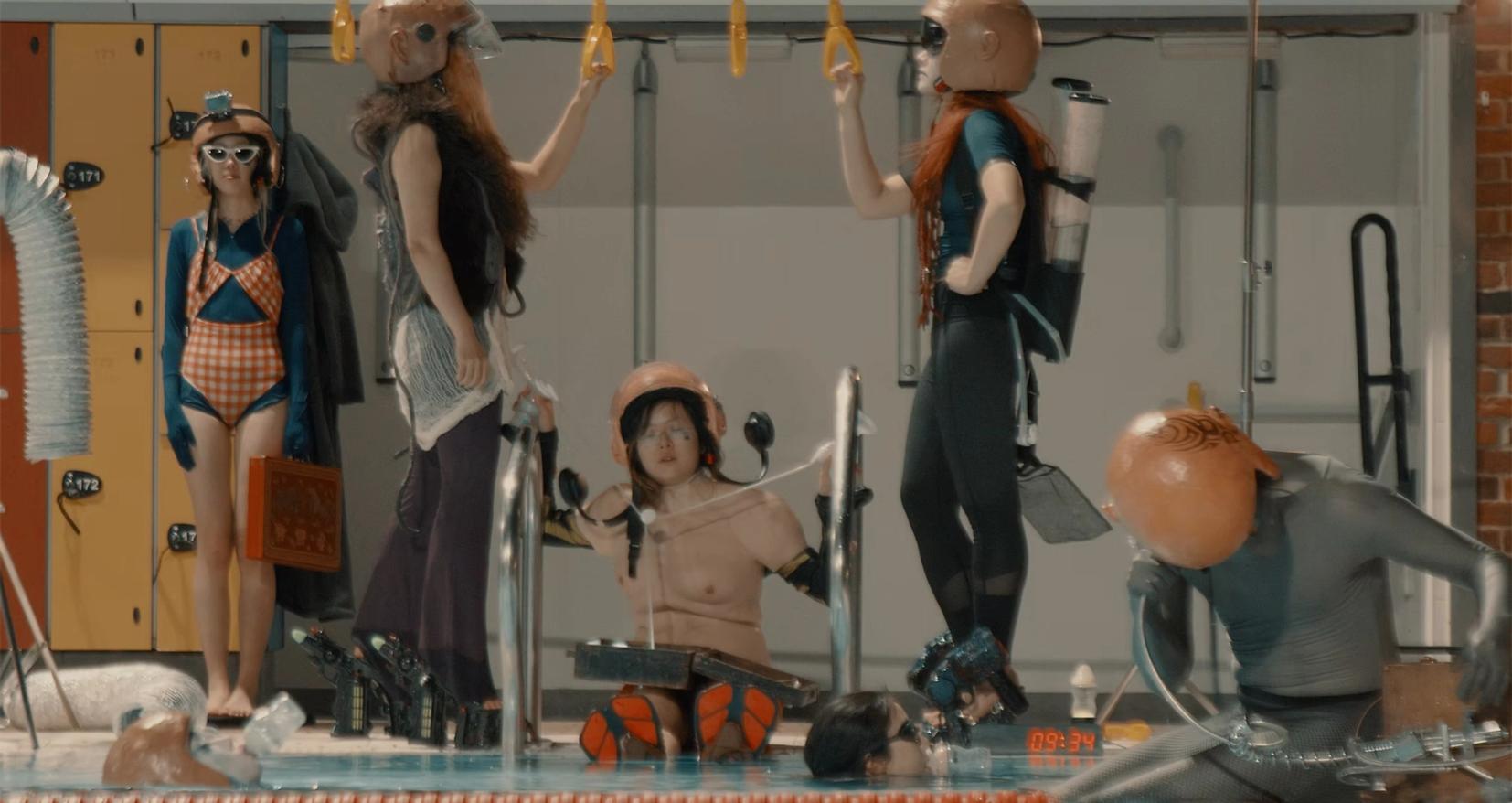
IMKE: Following on from this, I would like to turn to your notion that Helmeting materialises a posthuman listening condition. In light of AI and increasingly integrated technologies, we are confronted with developments that challenge earlier systems-theoretical distinctions. If Luhmann’s separation between psychic and social systems becomes harder to maintain, do you think we are moving toward a condition in which these feedback loops effectively collapse into one another — particularly if, as you suggest, the helmets act directly on the nervous system?
ZHUYANG: What interests me most in this question is not simply the future of technology, but the way it encourages us to reconsider what we mean by the human.
I often think about the nervous system in broader terms than a biological network inside the body. It is continuously shaped by sound, memory, language, architecture, technology and other people. Perception has never been produced in isolation; it has always emerged through relationships.
This is why prosthetics, disability studies and biopolitics have become important references in my research. What connects these fields is not simply an interest in technological extension, but a shared willingness to question fixed definitions of the body. They ask where the body begins and ends, what counts as a complete body, and who has the authority to define those boundaries in the first place.
AI interests me less as a technology than as a cultural metaphor through which contemporary society negotiates its imagination of the human.
Today, AI functions as much as a cultural imagination as an engineering reality. You can see new generations describe something as “AI” even when no artificial intelligence is involved. The word increasingly refers to an aesthetic, a feeling, or a way of imagining hybridity, intensity and possible futures. In that sense, AI shapes not only technology but also the language through which we imagine intelligence, perception and humanity itself.
This is why I describe Helmeting as materialising a posthuman listening condition. Not because it imagines a future in which humans become machines, but because it invites us to reconsider whether listening has ever belonged exclusively to an autonomous individual.
Perhaps posthumanism is less about what comes after the human than about re-reading what we have always called human. The body has never existed independently from its tools, environments, infrastructures or other bodies. Listening makes those relationships particularly visible because it is one of the few forms of perception that constantly exceeds the physical limits of the body.
My work therefore isn’t trying to predict a technological future. Im creating situations in which participants can experience how the boundaries between body, technology, environment and perception are continuously negotiated and inhabited. The question that remains is not whether technology will replace the human, but how every technological moment invites us to redefine what being human has always meant.
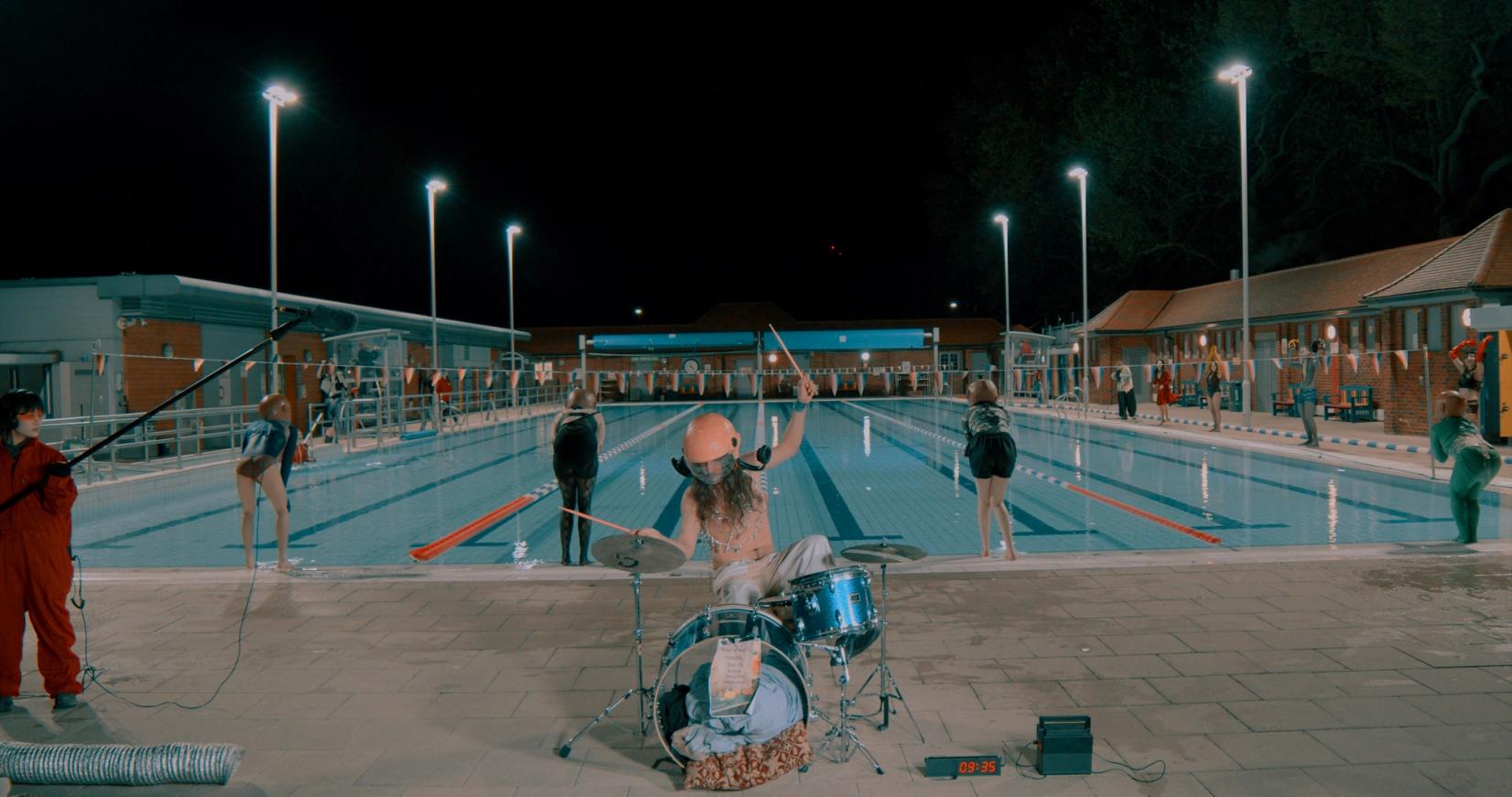
IMKE: I would like to end by considering the broader societal implications of what we have discussed. As with many technological innovations, the emergence of headphones was accompanied by anxiety and concern. Early on, there were fears that shared acoustic space would fragment — that invidividuals would no longer inhabit a common sonic field, but instead move through individualised auditory channels. This was framed as a potential threat to forms of collective life, even raising concerns about shared access to information and how it impacts communication within democracies.
Your work seems to complicate this narrative. You suggest that Helmeting signals a form of misalignment. Could you elaborate on this? Is it a sonic and or spatial misalignment — perhaps a misalignment between the individual nervous system and its environment? And if so, how might this affect the organisation of our socities?
ZHUYANG: One idea that runs throughout my practice is how I understand collectivity.
For me, collectivity is not the production of the same experience or the same conclusion. It is the possibility of remaining different while continuing to share a situation. People can perceive differently, remember differently and participate differently, while still becoming part of the same collective condition.
Perhaps this perspective comes from living between cultures. As someone who has moved between different countries, languages and cultural systems, I don’t experience collective memory as something singular or fixed. It is constantly translated, borrowed, misunderstood, reinforced and reinterpreted. Meanings rarely remain stable, and I find that instability incredibly productive.
This is also why I’m interested in objects that already exist within our shared cultural imagination. A loudspeaker is a simple example. Almost everyone recognises it immediately, but no one encounters it in exactly the same way. It can evoke advertising, protest, celebration, public announcements, music, political broadcasting or intimate personal memories. The object travels globally, while its meanings continue to mutate through different histories and cultural experiences.
Increasingly, this has become central to my practice. Helmeting explored how relationships are produced through listening. More recent works, such as the SPEAKERS series, ask what happens after those relationships leave the exhibition space. I’m interested in how visual languages, behaviours and symbols continue to circulate through media, documentation, imitation, conversation and memory. An artwork doesn’t end when an exhibition closes. It continues as something people remember, reinterpret, photograph, share and sometimes completely misunderstand. That cultural circulation has become part of the work itself.
Perhaps this is also why I feel close to queer thinking, disability studies, posthumanism and even the contemporary cultural imagination around AI. Not because they describe the same subject, but because they all encourage us to move beyond binary ways of thinking. Rather than separating individual from collective, body from technology, or original from copy, I’m interested in how these conditions remain relational, overlapping and continuously negotiated.
This is why I find misalignment productive rather than problematic. Misalignment creates thresholds rather than barriers. It allows people to choose how they enter the work and how deeply they participate. Some move actively through the installation. Some remain still. Some observe quietly. Others become deeply involved. These different forms of engagement are not deviations from the work—they are what allow the work to remain open.
Ultimately, I’m not interested in producing consensus. I’m interested in creating structures, where different perceptions, behaviours and memories can coexist without cancelling one another.
For me, collectivity is not the experience of sharing the same thing. It is the continuous possibility of sharing difference.