
Cross Lock
2021 - 2026
Anastasia Sif Karkazis | November 2026
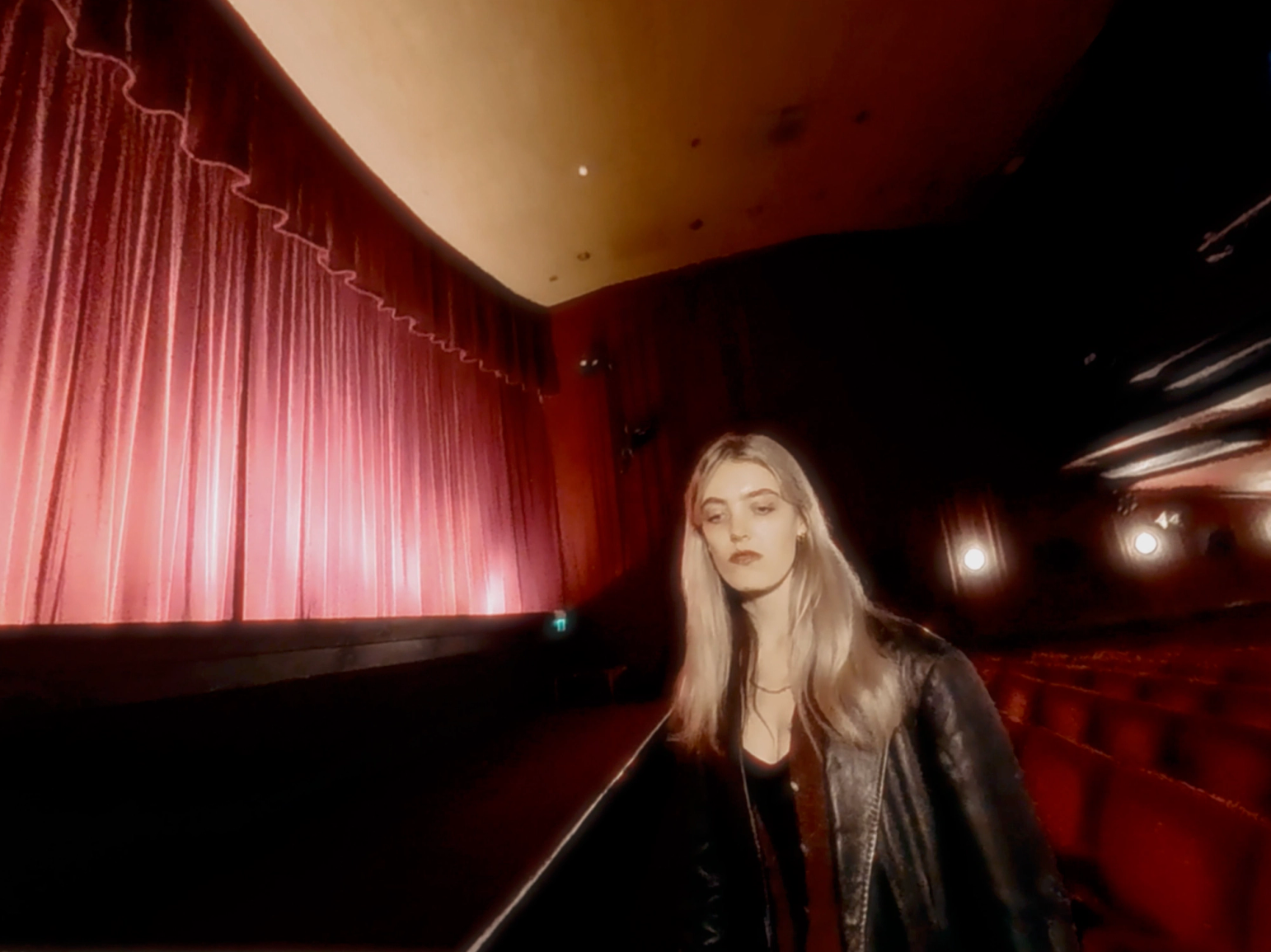
The recorded voice suggests permanence. It can be stored, replayed, edited — held in place. In memory, however, the voice behaves otherwise. It fragments, stretches, overlaps, slips out of reach. It reappears unexpectedly, sometimes triggered by something external — a sound, an image, a smell. What remains is not a single voice, but a shifting constellation. Resisting linearity, voices in our memory move between presence and absence, intimate yet unstable.
Anastasia Sif Karkazis’ work experiments with this tension. Using tools such as a vocoder, she routes her live voice through archived versions of itself — a displaced self-dialogue, a voice encountering its own temporal distance.
Synthesised in her work Cross-Lock, these experiments extend into writing, as Moving Discourse invites the artist to reflect on its creation — another echo, another reverberation of her voice.

The second we speak, our words vanish into the air, existing only as subjective memories. In contrast, the recorded voice can be edited with intention – intimate, omnipresent, and granted a form of immortality with spiritual associations. I was researching this relationship when I developed my sound work, Cross Lock, a term I coined to describe a vow made to one’s own voice. The name draws from the tension between "cross-talk" – the rhythmic exchange of conversation – and "deadlock" – the paralysis of two parties waiting for each other to act.
In 2021, I became obsessed with the vocoder, a tool that synthesizes speech for transformation. It was originally developed for wartime voice encryption before its popularization in music as a way to create futuristic, robotic vocals. Instead, I repurposed the vocoder by routing my live voice through the frequencies of my archived recordings. The result was a sonic duel and dependency between my past and present voices: my semantic live speech being pitch-controlled by its archived predecessor. While the concept often required a technical explanation for performances, the fragmented output resonated widely among listeners across venues in Copenhagen.
Around the time I moved to London in 2022, I explored 1970s sexploitation cinema, but my attention soon shifted to their scores. Using a sample from composer James Dashow’s Oedipus Orca (1977), I transformed my spoken words into pop vocals for a performance at The Slade School of Fine Art. Cross Lock became a portal that encouraged me to sing – a lifelong passion that had been suppressed since childhood.
I hear you all around
Your words still weigh me down
Lingering in the air
They echo so clear
Cross my heart and lock it
It's such a sin – cere
Mirrored in your eyes
Misunderstandings fossilize
In your memory
In your memory, yeah
You mute me
With your silence
The first verse recounts the echoing memory of a voice that controls which sounds deserve to be heard, while the chorus addresses how sight dominates the perception of what is said. The melody is carried by violin samples saturated with a constant tremolo effect, rapidly alternating between tones and speeds to reference the voice's frailty and duality. This uncertainty is sustained through the lyrics’ narrative and wordplay, weaving together contradictions like "sin" and "sincere" to reflect the discrepancy between the intention of our words and their interpretations.
Pulsating
Pulsating in your chest
I’m trying to connect
Do you hear me now?
Sow my words in the ground
Let them grow and flourish here
And vibrate through the air
Cross my heart and lock in
It's such a sin – cere
Mirrored in your eyes
Misunderstandings fossilize
In your memory
In your memory, yeah
You amplify me
When you sound
Pulsating
Pulsating in your chest
I’m trying to connect
During the song’s atmospheric bridge, a distant vocal reaches for a heartbeat detached from desire in an attempt to reawaken its neglected purpose. The connection is restored in the second verse, allowing language and meaning to grow and respire. The line, "You amplify me, when you sound," conclusively suggests how persistent expression is necessary to resonate with others and oneself. While writing the lyrics, I was influenced by pop culture and simultaneous confrontations of personal and public insecurity – specifically how rights to bodily autonomy are ceaselessly governed by restrictive laws, biometric surveillance, and the media industry. Heavy percussion pounds relentlessly through this noise, receding just before the outro. At the end, the pulsating heart is recalled as it crosses into a new sonic world.
My stage persona, Shelly Expose, grew from my engagement in voice acting and film scores, eventually becoming a conceptual mirror of the rise and fall of the stereotypical icon. After repeated pressure to conform to a traditional "pop diva" trajectory, I responded with deconstructed compositions, glitches, syncopated beats, and time-stretched Hollywood symphony samples. Cross Lock has evolved through many iterations, returning now as a music video set in the iconic Prince Charles Cinema in London.